This is default featured slide 1 title

Go to Blogger edit html and find these sentences.Now replace these sentences with your own descriptions.

This is default featured slide 2 title

Go to Blogger edit html and find these sentences.Now replace these sentences with your own descriptions.

This is default featured slide 3 title

Go to Blogger edit html and find these sentences.Now replace these sentences with your own descriptions.

This is default featured slide 4 title

Go to Blogger edit html and find these sentences.Now replace these sentences with your own descriptions.

This is default featured slide 5 title

Go to Blogger edit html and find these sentences.Now replace these sentences with your own descriptions.

Showing posts with label Kawasaki. Show all posts

Monday

2012 Kawasaki Vulcan 900 Classic LT Sports Touring

The 2012 Kawasaki Vulcan 900 Classic LT is 903cc liquid-cooled V-twin offers the optimal balance of performance and maneuverability. Optically correct windscreen is height adjustable to accommodate a wide range of riders. Top quality leather saddlebags are deep-dyed for long-lasting color and have easy-to-use quick-release fasteners. Kawasaki Vulcan 900 Classic LT Smooth and reliable engine tuned to deliver a healthy dose of torque at low rpm. Gear-driven balancer allows use of single-pin crankshaft without excessive vibration. Rubber mounted to reduce engine vibration at all speeds. 5.3-gallon fuel tank is largest in class.

The 2012 Vulcan 900 Classic LT comes equipped with the same excellent fuel-injected 903cc engine as the Vulcan 900 Classic. This powerplant delivers exceptional roll-on acceleration, and the nimble chassis adds to the LT’s flowing cruiser beauty. Its eye-catching touring features only add to this winning mixture of mid-displacement agility and large-displacement power and torque, sure to please any rider itching for a long road trip. At the core of the Classic LT’s touring package are striking, top-grain, reinforced cowhide saddlebags. The leather is carefully selected to minimize flaws and deep-dyed to prevent scraping off the finish.


The ideally sized bags feature a slant-top opening held shut by two 1.5-inch wide leather straps fitted with chrome buckles and stealth quick-release fasteners. The rolled and riveted top lids, along with metal reinforced upper edges on the bags, help maintain shape and keep unwanted moisture out of the bags. An embossed Vulcan logo on the reinforced dual-panel lids and chrome-plated brass studs finish off the look of these bags.

The Vulcan 900 Classic LT is available in the following two-tone color combinations: Metallic Moondust Grey / Ebony and Pearl Burnish Beige / Metallic Majestic Red. Whatever color you choose, the Vulcan 900 Classic LT gets noticed by everyone it passes. However, the Vulcan 900 LT’s big footprint shouldn’t alarm potential riders. Its low seat and narrow chassis rails blend comfortably into the fuel tank, which translates into plenty of accessibility for shorter riders and comfort for those of all sizes. Wide handlebars ideally situated with the seat and floorboards, coupled with roomy passenger accommodations, make the Vulcan 900 Classic LT a real joy whether it’s just a run to the store or a multi-day haul across the country.

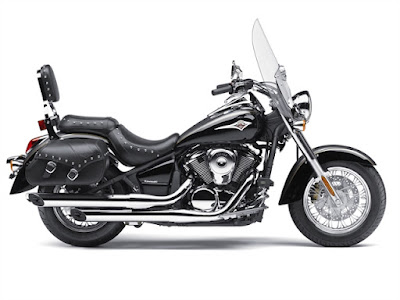

A comfortable seat for both rider and passenger are a must on a tourer, and the Classic LT has both, along with a backrest to keep the passenger relaxed as the miles tick by. Both the seat and the backrest are detailed with chrome-plated brass studs to match the bags. A thick, optically correct, acrylic plastic windscreen delivers smooth airflow around the rider and passenger, reducing wind fatigue and bug strikes over the course of long rides the 900 Classic LT encourages you to take.

Once past the 900 Classic LT’s handsome looks, owners will discover themselves enjoying a ride that was previously found only on larger cruisers. Applying lessons learned on Kawasaki’s Vulcan 2000, the Vulcan 900 models deliver exceptional roll-on acceleration, easy maneuverability, and performance that rivals larger displacement competitors.

Breakdowns can ruin any trip. The Vulcan 900 Classic LT utilizes a low-maintenance belt drive not only to help avoid undesired stops, but also to save weight and keep the rear end rolling in high style. Speaking of rear-end styling, the Kawasaki Vulcan 900 Classic LT sports a large, 180mm-wide rear tire the largest in its category. The beefy tire’s appearance augments the classic V-twin rumble courtesy of a single-pin crankshaft. It’s this look and sound that suggest a much larger motorcycle.

2012 Kawasaki Vulcan 2000 Classic LT Power Strong

The 2012 Kawasaki Vulcan 2000 Classic LT with 125 cu. in. engine produces massive torque across the entire rpm range. Strong and light forged pistons and alloy connecting rods. With huge 220mm flywheel smoothes power delivery. Push-rod valve actuation contributes to lower engine height, low center of gravity and relatively low seat height. Hydraulic valve adjusters reduce maintenance. Kawasaki Vulcan 2000 Classic LT is liquid and air cooling combination maintains consistent operating temperatures. Engine and transmission feature built-in oil and water pumps, reducing the number of parts and weight. Single-pin crank provides the desirable power-pulse feel and classic V-twin sound.

The 2012 Vulcan 2000 Classic LT Electronic Control Unit (ECU) manages electronic fuel injection and digital ignition system for optimized throttle response. With fuel injection system features sub throttle valves for a smooth, linear power band. Fine atomizing injectors in the fuel injection system deliver ultra-fine fuel/air mixture for greater combustion efficiency, increased power and optimum fuel economy. Center spark plugs enhance combustion for smooth, consistent power and reduced emissions.


The Vulcan 2000 Classic LT includes a bullet-style headlight, and a chrome instrument panel with a large-face speedometer mounted atop the bike’s stretched, 5.5-gallon fuel tank. The V-shaped panel keeps the rider informed of all systems, via an LCD display and warning lamps.  This Vulcan motorcycle rides on bright, cast aluminum 16-inch wheels with a 150/80 front radial tire and a wide, 200/60 rear radial tire. Two beefy, 300mm front disc brakes with four-piston calipers, and a single rear disc brake with a two-piston caliper bring this show to smooth, powerful stops. While it comes with special features as part of the package, this motorcycle encourages further customizing. The broad selection of authentic Kawasaki accessories available through Kawasaki dealers gives Vulcan 2000 Classic LT owners plenty of opportunity to do just that.


Comfortable seats for rider and passenger are a must on a tourer. The Classic LT offers both, along with a backrest to keep the passenger relaxed and smiling as the miles tick by. Detailed with chrome-plated brass studs to match the bags, the classically styled seat and backrest blend attractive visual appearance with comfort. A thick, optically correct acrylic plastic windscreen provides smooth airflow around the rider and passenger on the road. Height adjustability lets the rider fine-tune the large still-air pocket depending on conditions. Power for this stylish motorcycle comes from a massive 2,053cc V-Twin fuel-injected adrenaline pump. The muscular engine sports a 103 x 123.2mm bore and stroke, forged pistons, alloy-steel connecting rods, a huge 220mm flywheel, and dual cams located within the one-piece crankcase.


Right-side pushrods actuate four valves per cylinder and help reduce the 125-cubic-inch engine’s height; allowing a low center of gravity and relatively low seat height. Hydraulic valve-lash adjusters automatically maintain zero valve clearance and provide smoother, quieter operation. The big V-twin’s chrome air cleaner cover is nestled between the black matte finished cylinders artfully contrasting the polished metallic cooling fins, which manage the temperatures for the bottom three-quarters of the engine. The top quarter of the V-twin engine is liquid cooled. Further cooling assistance comes via the oil and water pumps incorporated in the engine and transmission which also serves as the oil tank.


Feeding the big V-twin is a fuel injection system with dual 46mm throttle bodies and sub throttle valves, all managed by an electronic control unit (ECU). Included in the Vulcan 2000 Classic LT’s advanced electronics is a gear position sensor in the transmission that sends signals to the ECU, which refines the fuel injection volume and ignition timing. This performance improvement  combined with an iridium spark plug ignition system, the sub-throttle valves and fine-atomizing injectors delivers sharp throttle response, big power and optimum fuel economy in a smooth, linear powerband.
Final drive to the rear wheel is provided by smooth, quiet and low-maintenance belt drive. That classic V-twin rumble from the Vulcan 2000 Classic’s dual polished mufflers thanks to its single-pin crankshaft will delight cruiser enthusiasts. Vibration dampening dual counter balancers and rubber engine mounts mean long sojourns can still be broad-smile inducing.

The engine is a stressed member of the Vulcan’s steel, double cradle frame, which has a large-diameter, box-section single-tube backbone. A simple but elegant rear steel-tube swingarm suspension with a direct-action single shock provides 3.9 inches of travel, and includes spring preload and rebound adjustment. Up front, a large, 49mm fork provides more precise steering feedback and 5.9 inches of travel.

Friday

2012 Kawasaki Vulcan 1700 Nomad Amazing Sport Touring

The all new Kawasaki Vulcan 1700 Nomad features the most advanced and sophisticated long stroke liquid-cooled V-Twin engine in Kawasaki history, along with all the features you need for weekends out of town. Fully outfitted with a protective adjustable windshield, lower fork-leg wind deflectors, an ergonomic saddle and floorboards for the rider, a separate rear seat with back rest, hand grips and floorboards for the passenger, and large hardcase touring saddlebags to share. Be careful though owning a Nomad may turn you into one.

The Kawasaki Vulcan 1700 Nomad Saddle Bag Holding an amazing 10 gallons of gear apiece, the Nomad’s standard top-opening hard saddlebags are fully weatherproof and feature sturdy locks for security and chrome guards for a classic look.  Vulcan 1700 Nomad easy-to-use cruise control works with the 1700 Nomad’s fully electronic throttle valve system (ETV) to set steady speeds between 35 and 85 mph in third through sixth gears.


Kawasaki Vulcan 1700 Nomad designed to be as light and slim as possible, the Nomad’s single backbone double cradle frame offers a short seat-to-steering head distance, with a correspondingly short wheelbase. That easy-to-reach handlebar facilitates slow-speed maneuvering and helps maximize rider confidence. Adding to the light and easy handling are suspension components that match the Vulcan 1700 Nomad’s intended usage. An elegantly simple rear swingarm with twin air-assisted shocks provides 3.1 inches of rear suspension travel, and features air spring preload and four-way rebound adjustment. Up front, a large 43mm fork offers precise steering feedback and 5.5 inches of travel. 

The key to the 2012 Vulcan 1700 Nomad considerable flexibility is its blend of touring-oriented hardware and the uniquely designed Vulcan 1700 platform, which offers a ton of versatility and performance whether in Voyager, Classic or Nomad configuration. It all starts with that engine, a thoroughly modern interpretation of the big-inch V-twin that’s forged such a hearty reputation over the decades. This 1,700cc powerplant features liquid cooling, a 52-degree V angle, overhead cams, high compression, a long-stroke design and all the latest technology for prodigious power and torque spread over a shockingly wide rpm range. Redesigned mufflers not only enhance the look, but also give it the deep sound you’d expect from a bike like this. There’s not only loads of torque down low the range you’ll spend most of your time in while aboard but there is also plenty of grunt all the way to 5,000 rpm. Just twist the throttle and the Nomad generates forward thrust without hesitation, providing ample acceleration for spirited riding and waves of low-rpm torque when you’re just thump-thumping along in top gear, checking out the scenery and relaxing.


More useful technology is found in the Nomad’s fully Electronic Throttle Valve system. Working with the rest of the advanced fuel injection system, the electronic throttle valve enhances engine response without detracting from its distinctive V-twin feel. The system utilizes an Accelerator Position Sensor (APS) and a Throttle Position Sensor (TPS). Both units feed data to the ECU, which adjusts the throttle plates to tailor intake airflow accordingly. The system offers a natural throttle feel, because the APS is activated by a throttle body pulley connected by cables to the throttle grip. Besides the obvious FI advantages such as improved fuel economy and automatic adjustment for altitude changes, the system also permits easy hands-off warm-up and idle speed control. The Nomad also features a water-cooled alternator that produces a staggering 46.8 amps of electrical output – plenty to power a selection of electronic accessories to enrich motorcycle travel.

The Nomad’s electronic cruise control system is conveniently operated from the right handlebar, and can be engaged at any speed between 30 and 85 mph in any of the top four gears. The cruise system can be disengaged in any of the following ways: brake lever, clutch lever, rear brake pedal, or manually turning the throttle grip past the “closed” position. Its six-speed transmission offers positive shifting action and features overdriven 5th and 6th gears, which contribute greatly to a relaxed ride and excellent fuel economy at highway speeds. Power is routed to the rear wheel via a carbon fiber drive belt that has a 40-percent higher tensile strength than current Kevlar belts.

Breakfast in town or brunch at the beach you decide aboard the new Vulcan 1700 Classic LT. With leather saddlebags and a full-size windshield to go with its premium engineering, a meandering Sunday ride never felt so right. You are riding on a machine that looks so great because the studded leather saddlebags, dual seats and backrest, along with t wo exclusive paint finishes, are unique to the Vulcan 1700 Classic LT. Add your choice of Genuine Kawasaki Accessories, and the Classic LT is definitely cruising at it s best.

2012 Kawasaki Vulcan 1700 Vaquero Stylish Touring Concep

The 2012 Kawasaki Vulcan 1700 Vaquero new engine liquid-cooled, four valves per cylinder, fuel-injected 1,700cc 52-degree V-twin engine. Long-stroke 102 x 104mm bore and stroke dimensions deliver high torque levels with a distinct V-twin feel. Valve-actuation system uses a single overhead cam arrangement instead of pushrods for quicker revving and enhanced mid-high rpm power. Semi-dry sump design allows lower crankshaft positioning and a longer piston stroke without increasing engine height. Single-pin crankshaft accentuates the engine’s V-twin character by providing strong power pulses. Kawasaki Vulcan 1700 Vaquero is Large-capacity airbox is located on both sides of the engine. Small-diameter iridium sparkplugs reach deep into the combustion chamber for high combustion efficiency, especially during low-load operation. Engine tuning, combined with long-stroke design, offers superior acceleration in the 50-70 mph range. 

2012 Kawasaki Vulcan 1700 Vaquero

 2012 Kawasaki Vulcan 1700 Vaquero with Liquid-cooled 1,700cc V-twin puts out loads of torque, 6-speed transmission allows for relaxed cruising and electronic throttle actuation system ensures optimized injector timing and throttle valve position, resulting in an accurate, powerful engine response. With Electronic cruise control maintains speed for more comfort on long trips. Frame-mounted front fairing directs aerodynamic forces to the chassis to keep steering feel light. Kawasaki Vulcan 1700 Vaquero is Unique “muscle car” styled instrumentation keeps the rider fully informed. With Audio system has navigation audio prompt capability, FM, AM and WX and is compatible with iPod, XM tuner, or CB radio.

Custom, blacked-out details are your first clue to the Vaquero’s mission, and there’s plenty to see. It all starts with the beautiful Candy Plasma Blue paint on the abbreviated fairing, sculpted tank and curvaceous bodywork that looks as if it could be a mile deep. The 2012 Kawasaki Vulcan 1700 Vaquero Special Edition takes it a step further with its Candy Lime Green with Ebony paint job and a custom marbleized paint graphic. Luxurious chrome accents (engine guards, exhaust, mirrors, etc.) provide a beautiful counterpoint to the glossy paintwork, but it’s perhaps the multi-textured blacked-out engine and chassis treatment that best highlights the 2012 Vulcan 1700 Vaquero radical aesthetic look. The engine, air-cleaner cover, wheels, fork assembly and tank cover all get the blackout treatment, which gives the bike a true custom look that’s beautiful and menacing at once. It’s definitely not a motorcycle you’ll easily forget.

2012 Kawasaki Vulcan 1700 Vaquero Blue

2012 Kawasaki Vulcan 1700 Vaquero Green
Cool, low, long, ultra stylish all these adjectives fit the Vulcan 1700 Vaquero plus one more plenty functional. This bagger, introduced just last year into the Vulcan cruiser line, proves that practicality and cool can coexist on the same bike. Its aggressive and muscular styling makes any Vaquero rider stand out from the crowd. And with a powerful 1,700cc engine, electronic cruise control and full-featured audio system, the Vaquero begs to be taken out on the open road.

Beneath all that beautiful bodywork, paint and chrome is a superbly engineered motorcycle, one that blends power, handling, durability and confidence-inspiring character in a massively functional package. It all starts with the Vaquero’s 1,700cc liquid-cooled V-twin, which powers all four Vulcan 1700 models Voyager, Classic, Nomad and Vaquero. A thoroughly proven design, this 52-degree Vee boasts the very latest in engine technology yet looks like a throwback to the past, a time when the V-twin was the engine to have powering your motorcycle. Features include an overhead cam design, high compression and a long-stroke dimensional design that results in the sort of effortless low- and mid-range thrust that’s so desirable and useful in a big-inch cruiser.

2012 Kawasaki Vulcan 1700 Vaquero Speedometer

Vaquero’s throttle valve system works with the advanced electronic fuel injection to optimize engine response without detracting from its distinctive V-twin throb. The system uses an Accelerator Position Sensor (APS) and a Throttle Position Sensor (TPS) that feed data to the ECU, which adjusts the throttle plates to tailor intake airflow accordingly. The system offers a natural throttle feel, because the APS is activated by a throttle body pulley connected by cables to the throttle grip. Besides the obvious FI advantages such as improved fuel economy and automatic adjustment for altitude changes, the system also permits easy hands-off warm-up and idle speed control. Vaquero also features a water-cooled alternator that produces a staggering 46.8 amps of electrical output – plenty to power a selection of electronic accessories that enrich motorcycle travel.


The result of all this is a massive quantity of usable torque spread out over a shockingly wide rpm range. With 108 foot-pounds of torque, a mere twist of the Vaquero’s throttle delivers arm-stretching acceleration for freeway passing or spirited riding, and the smooth wave of low-rpm grunt is always ready to please when you’re just boppin’ down the boulevard, checking out the scene and chillin’. Speaking of just cruisin’ along; the Vaquero offers true touring-bike convenience in the form of its electronic cruise control system, conveniently operated from the right handlebar and usable at any speed between 30 and 85 mph in any of the top four gears. The cruise system can be disengaged in any of the following ways: depressing the brake lever, clutch lever, rear brake pedal, or manually turning the throttle grip past the “closed” position. 

Additional touring acumen shines through the engine’s six-speed transmission with overdriven 5th and 6th gears, which contributes to a relaxed ride and excellent fuel economy at highway speeds. Power is routed to the rear wheel via a narrow carbon fiber-reinforced drive belt that has a 40-percent higher tensile strength than current Kevlar belts. And that chopped, custom-look fairing? Although lower than a traditional windshield or full fairing, it still cuts a decent-sized hole in oncoming atmosphere, giving the rider a useful still-air cocoon in which to enjoy the ride. Lockable side-loading hard bags set the Vaquero apart from its Vulcan 1700 brethren. They’re beautifully integrated and spacious, and styled to highlight the bike’s long, low look. A scooped saddle offers a comfortable rider perch, while a minimalist passenger pad sits atop a wildly shaped rear fender that integrates equally stylish taillight and turn signal assemblies.

Wednesday

Kawasaki Vulcan 1700 Voyager ABS Luxury Design Engine

The 2012 Kawasaki Vulcan 1700 Voyager ABS models feature the latest, fastest version of Kawasaki’s sophisticated K-ACT system, which enables riders to execute controlled, balanced braking. Designed to complement the riders’ brake inputs, the system distributes the ideal amount of brake pressure to maximize braking efficiency. Low battery mode maintains ABS function while reducing signal frequency to conserve power when needed. For controllability in tight corners and when executing U-turns, K-ACT’s coactive function does not engage when braking is initiated at speeds below 12 mph, ABS function is disengaged at speeds below 4 mph. Both ABS and non-ABS models use dual 300mm front disc brakes with four-piston calipers and a two-piston rear disc brake for sure, powerful stops.


The Kawasaki Vulcan 1700 Voyager ABS Liquid-cooled, four valves per cylinder, fuel-injected 1,700cc 52-degree V-twin engine. Long-stroke 102 x 104mm bore and stroke dimensions help deliver high levels of torque with a distinctive V-twin feel. Valve system uses a single overhead cam arrangement instead of pushrods for quicker revving and enhanced mid. Semi-dry sump allows a lower crankshaft placement and a longer piston stroke without increasing engine height. Single-pin crank accentuates the engine’s V-twin character by providing stronger power pulses. Kawasaki Vulcan 1700 Voyager ABS large capacity airbox is located on both sides of the engine. Small-diameter iridium sparkplugs reach deep into the combustion chamber for high combustion efficiency, especially during low-load operation.


For those who heed the call of the open road, the Vulcan 1700 Voyager satisfies that wanderlust and then some. Complete with all the full-dress accouterments necessary to keep riders and passengers comfortable on long journeys, and equipped with a powerful engine that helps eat up the miles, the Voyager delivers a memorable experience in classic style. And with its muscle car-inspired styling, the curvaceous Voyager turns heads whether your destination is across the country or just across town. The 2012 Vulcan 1700 Voyager ABS boasts all the stuff you’ll need for adventurous treks: a smooth and torquey 1,700cc V-twin powerplant, large frame-mounted fairing, beautifully integrated luggage that stows a week’s worth of gear, a comfortable saddle, electronic cruise control, high-fidelity sound system, optional K-ACT anti-lock/integrated braking system and the sort of design acumen and dependability Kawasaki is renowned for. 


All V-twins present engine heat challenges, especially full-dress models with leg shields, since the rear cylinder and exhaust pipe are almost directly under the rider. Kawasaki is the first manufacturer to provide, as standard equipment, an effectively designed air management system to help increase rider comfort at a stop. The primary part of the Kawasaki Air Management System (KAMS) routes radiator heat to the ground, below the engine, while the secondary part of the system draws heat away from the rear cylinder and exhaust pipe and directs it to the ground on the left side of the motorcycle. This system is particularly effective in warm weather while stopped in traffic or for extended periods of low-speed operation, such as during staging for group rides or parades.


Though a non-ABS model is available, the 1700 Voyager’s driveline/braking technology is enhanced with the addition of the second-generation Kawasaki Advanced Coactive Braking Technology (K-ACT) system. Available on the ABS-equipped Voyager, K-ACT uses advanced electronics to translate the rider’s braking inputs from both the front lever and rear pedal into smooth, balanced deceleration and maximum stopping performance. Basically, the front lever also activates the rear brake, and the rear pedal also engages the right front caliper: K-ACT ensures all this happens seamlessly and efficiently, and the second-generation system uses the same smaller, lighter ABS unit and faster, higher-spec brake ECU found on the Kawasaki Concours 14 ABS motorcycle for even smoother, more precise operation. K-ACT’s coactive function does not engage when braking is applied at speeds below 12 mph, and the ABS function is automatically disengaged at speeds below 4 mph.


There’s much more on the unique technology front, including Kawasaki’s fully electronic throttle valve system, which works in concert with the Voyager’s Electronic Fuel Injection (EFI) system to enhance engine response without dulling the big Vee’s distinctive throb. The system also helps the ECU deliver ultra-precise air/fuel metering and more accurate idle speed control. The setup utilizes an Accelerator Position Sensor (APS) and Throttle Position Sensor (TPS) that feed data to the ECU, which adjusts the throttle plates to tailor intake airflow accordingly. The system offers natural throttle feel, as APS is activated by a throttle-body pulley connected by cables to the throttle grip.

The 2012 Vulcan 1700 Voyager ABS with 1,700cc 52-degree V-twin all of this cool technology was designed to support is a marvel of engineering, and is as functionally capable as they come. Featuring liquid cooling, four-valve cylinder heads and a single overhead cam setup for big-time mid-range power, the engine utilizes a pair of big pistons to pump out a massive quantity of torque over an unbelievably wide rpm range a key to this engine’s superb flexibility. There’s a boatload of the stuff located throughout the rpm zone where riders will spend the most time – and more than enough from idle all the way to 5,000 rpm, so major-league, arm-straightening thrust is available right now every time you twist the grip.

2012 Kawasaki Concours 14 ABS Super Sport Touring

The Kawasaki Ninja ZX-14-based 1,352cc inline-four with variable valve timing provides smooth power across a wide rev range. Kawasaki Traction Control (KTRC) reduces engine output when wheelspin is detected, helping the rear tire to regain grip. Kawasaki Coactive-braking Technology (K-ACT) links front and rear brakes and has two modes to suit different riding styles, aluminum monocoque frame is lightweight, narrow and rigid. The 2012 Kawasaki Concours 14 ABS tuned to provide smooth power across an extremely wide rev range, the Concours 14 has power to spare. Variable valve timing improves the engine’s flexibility and efficiency by altering camshaft profiles to boost low-end and mid-range without sacrificing top-end power. Its compact and narrow engine design minimizes weight for maximum handling and performance. Chrome composite-plated aluminum cylinder bores are lightweight, durable and quickly carry heat away from the combustion chamber and piston for supreme durability under high loads.


Expertly mixing high performance and long-distance functionality, the 2012  Kawasaki Concours 14 ABS inspires riders to pull out their big maps and harness the full capabilities of this sport touring motorcycle. Continuing the 26-year tradition of sport touring, the Concours offers just the right ratio of technology, comfort and reliability that coax riders to soak up the miles. This sport-oriented tourer can go the distance with the best world-class touring rigs yet still negotiate the twists and turns of America’s backroads in fine, Ninja-inspired tradition. Through canyons, over highways and even through the cities, the Concours is a category-defining motorcycle.

The Concours 14 boasts several features that enhance comfort, convenience and safety, solidifying its position atop the sport touring heap. Dynamic bodywork increases comfort by routing heat away from the rider and passenger. A tall, electrically adjustable windscreen creates a calm cockpit experience with help from ducts above the instrument panel, which balances pressure areas outside and inside the screen. Handgrip heaters come standard, providing comfort when the temperatures drop to disagreeably cold temperatures. The Concours is packed with technological features that enhance the riding experience. The bike’s K-ACT (Kawasaki Advanced Coactive-braking Technology) braking system offers two modes of linked, anti-lock braking and great overall performance. A high-tech traction control system (KTRC: Kawasaki Traction Control) not only reduces wheelspin on slick surfaces, offering riders more confidence-inspiring feedback, but it can be easily switched off at the rider’s discretion.


The heart of the Concours sport-touring package is an amazing and thoroughly modern 1,352cc DOHC inline-four sourced from the legendary ZX-14 sportbike. The Concours 14 engine generates excellent low- and mid-range power, all followed by a top-end rush that would turn most open-class sportbikes green with envy. A big part of its tremendously wide power delivery is due to its variable valve timing (VVT) system, which automatically alters camshaft profiles according to rpm to boost low-end and mid-range power without sacrificing top end. Advanced fuel injection, ram-air induction and decades of experience building the world’s most potent motorcycle engines add up to a simply amazing powerplant, one that makes the Concours 14 ABS a force to be reckoned with in the performance sport-touring segment – just as the original Concours was 26 years ago.

The Concours 14’s chassis is very much up to the challenge of controlling this prodigious powerplant. Its unique monocoque frame provides massive stiffness along with excellent handling characteristics and a high degree of rider feedback. Cradling the engine from the top, the frame’s compact structure keeps the bike narrow where it needs to be and allows optimum packaging of the bike’s vital systems. The Tetra-Lever shaft drive, which routes all that power to the rear wheel, uses a four-link design to offset the lifting and squatting tendencies of lesser shaft drive systems when the throttle is opened and closed, all of which results in true sportbike handling. Plus, the Tetra-Lever system is almost completely maintenance free. No mystery, then, why the Concours 14’s powertrain has earned critical acclaim around the world for its silky smooth power delivery.

2012 Kawasaki ZX-14R Super Sport Engine

The 2012 Kawasaki Ninja ZX-14R massively more powerful 1,441cc inline-four engine features a 4mm longer stroke, reworked cylinder head assembly, polished ports and lighter, stronger pistons for more power across the rev range. KTRC traction-control system features three different modes for varying conditions and is controlled by a handy switch assembly on the left handlebar. All-new exhaust system features tapered and reshaped head pipes and an all-new muffler assembly for low noise and emissions. Kawasaki ZX-14R redesigned aluminum monocoque frame is narrow, strong and rigid. All-new swingarm assembly is longer and features strengthening gussets to cope with the engine’s newfound power. Transmission gears are more durable thanks to new temperature and surface treatments. All-new bodywork package builds upon the slick aesthetic image of the previous machine, includes a rear seat cowl and adds better air management to the mix for improved rider and passenger comfort.

It’s gotta be ugly competing against the 2012 ZX-14 year after year. When it arrived on the big-bore sportbike stage in 2006, the big Ninja blew everyone’s minds owners, journalists and competitors with its incredible thrust, sport-tourer comfort, agile handling and aerodynamic full-coverage bodywork. Continuous refinement has kept the 14 a step ahead of the competition, all while filling enthusiasts’ face shields with wild, ear-to-ear grins. Fortunately for Kawasaki fans (and unfortunately for the competition), there’s no let up for 2012. Not only is the newly R-designated Ninja ZX-14R massively more powerful, it’s also almost entirely new, with more of the character, design excellence, and finesse you’ve come to expect from Team Green the company that’s been building legendary open-class motorcycles for more than 40 years.


Big power delivered smoothly has always been a big Ninja hallmark, so the changes for 2012 begin in the new ZX-14R’s engine bay. First off, there’s more displacement via a 4mm stroke increase; to 65mm (up from 61mm), with displacement now registering 1441cc (up from 1352cc). Combustion chamber shapes are newly optimized for 2012, and they’re surface-milled now, not cast. Intake ports are reshaped and polished for maximum flow while working in concert with longer and more durable intake valves. Yep, the new Ninja ZX-14R really does come “ported” right from the factory.

The camshafts working those valves are more radical, with increased lift and revised profiles, while a stronger cam chain and revised tensioning system maximize reliability at the stratospheric rpm levels this engine is capable of. Newly designed forged pistons with thinner crowns offer increased durability and less weight, and are cooled by a new oil-jet cooling system that pumps a continuous stream of lubricant at the underside of each piston. (Testing shows the engine runs considerably cooler with this system.) There’s more: Compression is up from last year; connecting rods have beefier small ends, and are made of a stronger material; crankshaft main journals are thicker, from 38 to 40mm; a new air-cleaner element is larger and thicker, with 10% more surface area and 40 percent more airflow capability; and transmission gears have been heat- and surface-treated to be even more durable and shift more smoothly.


Feeding this class dominating new engine is a revised fuel injection system that offers automatic idle adjustment and reduced emissions. Burned hydrocarbons exit through a heavily revised exhaust system with reshaped, larger-diameter tapered header pipes and larger-volume, reshaped mufflers, each with an advanced catalyzer to minimize emissions. The benefits of all this hot-rodding are substantial, as there’s more power virtually everywhere across the rev range. The increases are most profound in the mid-high rpm range, with notably stronger acceleration from 4,000 rpm onward. This translates into the sort of thrust riders can appreciate in a wide variety of situations, whether it’s powering up a freeway on-ramp to merge with fast-moving traffic or cruising along a deserted backroad on a sunny, Sunday-morning ride. On the ZX-14R, total domination is just a twist of the throttle away.


That power is more manageable than ever, too, thanks to the addition of a back-torque limiting “slipper” clutch assembly and a KTRC traction control and ignition management system that features three different riding modes full power, medium power and a third mode for low-traction (wet/slippery) conditions. The KTRC system is controlled by a bar-mounted toggle/push switch, and the system’s effects can be monitored on a seven-segment bar graph in the cockpit’s LCD info-screen. The back-torque limiting clutch technology comes directly from the racetrack, and helps eliminate the wheel-hop and stability eroding torque effects of energetic downshifting and braking while cornering, or during spirited or emergency stops. It also helps protect the bike’s drive train, for optimum durability.

2012 Kawasaki ZX-10R ABS Monater Super Sports

The new 2012 Kawasaki Ninja ZX-10R ABS design is compact, narrow and lightweight. Camshafts, crankshaft and pistons designed to complement the engine’s prodigious power production. The ZX-10R ABS large intake valves, camshaft profiles and port shapes help maximize power production and smooth power delivery. The highly advanced 2012 Ninja ZX-10R has just met its match: The 2012 Ninja ZX-10R ABS. Built with the same cutting-edge sport bike technology, much of it right off the MotoGP circuit, the ZX-10R ABS has an important advantage: anti-lock braking. At first, anti-lock braking might seem a touch out of place on a purebred sportbike. But this system was designed from the start to provide maximum performance. And when you consider the many safety- and control-oriented benefits provided by the amazing electronic and hardware technology available today, it begins to make a lot of sense.

Think of it: You’re braking for a blind, decreasing-radius corner after a long day of sport riding. Shadows are long and you’re tired, so you don’t notice a patch of sand until it’s too late to correct. But instead of tucking as you continue braking through the sand, your front tire maintains most of its traction, as the anti-lock braking system intervenes until the surface improves allowing you to arc gracefully into the corner, a little wiser and a lot more intact physically than you might have been riding a non-ABS motorcycle. Kawasaki calls its anti-lock system KIBS or Kawasaki Intelligent anti-lock Brake System. The use of “intelligent” is apropos, too, considering just how smart the new KIBS is. It all starts with the smallest and lightest ABS unit ever built for a motorcycle, one Bosch designed specifically with sport bikes in mind. It’s nearly 50 percent smaller than current motorcycle ABS units, and 800 grams lighter, adding only about 7 pounds of weight compared to the non-ABS machine, a pound of which is accounted for by the larger battery.


KIBS is a multi-sensing system, one that collects and monitors a wide range of information taken from wheel sensors (the same ones collecting data on the standard ZX-10R for its S-KTRC traction control system) and the bike’s ECU, including wheel speed, caliper pressure, engine rpm, throttle position, clutch actuation and gear position. The KIBS’s ECU actually communicates with the bike’s engine ECU and crunches the numbers, and when it notes a potential lock-up situation, it tells the Bosch ABS unit to temporarily reduce line pressure, allowing the wheel to once again regain traction.

Aside from this system’s ultra-fast response time, it offers a number of additional sport-riding benefits, including rear-end lift suppression during hard braking, minimal kickback during ABS intervention, and increased rear brake control during downshifts. The high-precision pressure control enables the system to avoid reduced brake performance (sometimes seen on less advanced systems), maintain proper lever feel and help ensure the ABS pulses are minimized.


The rest of the 2012 Ninja ZX-10R ABS is equally advanced. Complete with a powerful engine and lightweight chassis, it also boasts a highly advanced and customizable electronic system that allows riders of all skill levels to harness and experience the ZX-10R ABS’s amazing blend of power and razor-edge handling. The system is called Sport-Kawasaki Traction Control. Motorcyclists have forever been challenged by traction-related issues, whether on dirt, street or track. Riders who can keep a rear tire from spinning excessively or sliding unpredictably are both faster and safer, a tough combination to beat on the racetrack. And when talking about the absolute leading edge of open-class sport bike technology, where production street bikes are actually more capable than full-on race bikes from just a couple years ago, more consistent traction and enhanced confidence is a major plus.

The MotoGP-derived S-KTRC system works by crunching numbers from a variety of parameters and sensors – wheel speed and slip, engine rpm, throttle position, acceleration, etc. There’s more data gathering and analysis going on here than on any other Kawasaki in history, and it’s all in the name of helping racers inch closer to the elusive “edge” of maximum traction than ever before. The S-KTRC system relies on complex software buried in the ZX-10R’s Electronic Control Unit (ECU); the only additional hardware is the lightweight speed sensors located on each wheel.

Unlike the KTRC system on Kawasaki’s Concours 14 ABS sport tourer, which primarily minimizes wheel slip on slick or broken surfaces as a safety feature, the S-KTRC system is designed to maximize performance by using complex analysis to predict when traction conditions are about to become unfavorable. By quickly but subtly reducing power just before the amount of slippage exceeds the optimal traction zone, the system which processes every data point 200 times per second maintains the optimum level of tire grip to maximize forward motion. The result is significantly better lap times and enhanced rider confidence exactly what one needs when piloting a machine of this caliber.

The potent ZX-10R engine is a 16-valve, DOHC, liquid-cooled inline-four displacing 998cc via 76 x 55mm bore and stroke dimensions. This powerplant is tuned to optimize power delivery, center of gravity and actual engine placement within the chassis. Torque peaks at an rpm range that helps eliminate power peaks and valleys that make it difficult for racers and track-day riders to open the throttle with confidence. Large 47mm throttle bodies help with throttle control. Secondary fuel injectors enhance power output and power characteristics at high rpm; the lower injectors are always on, while upper injectors come on as needed according to degree of throttle opening and engine rpm. An Idle Speed Control (ISC) valve on the throttle body unit automatically adjusts idle speed, contributing to easier starts and off-idle throttle response

2012 Kawasaki NInja 1000 ABS New Generations Super Sport

The 2012 Kawasaki Ninja 1000 ABS new features 1,043cc inline-four with DFI offers prodigious torque for effortless passing and backroads entertainment. Lightweight aluminum frame is narrow and tuned to transmit optimal feedback to the rider. Fully adjustable inverted fork has settings designed for sporty performance and ride quality. Design of horizontal back-link rear suspension contributes to mass centralization. Radial-mounted front brake calipers combine with the radial-pump front brake master cylinder to offer superb control and feel. Sleek, supersport styling gives the Ninja 1000 a distinctive look. Relaxed, upright riding position contributes to all-day comfort. Larger fuel capacity offers substantial range. Windscreen is adjustable to three positions, allowing for optimum wind and weather protection.


The Kawasaki Ninja 1000 ABS engine’s relatively low crankshaft position allows a moderately long stroke without adding engine height. A secondary engine balancer, driven off a gear on the sixth web of the crankshaft, eliminates excess vibration and contributes to rider comfort. Ninja 1000 ABS with 38mm Keihin throttle bodies cram the air/fuel mixture directly into combustion chambers via downdraft intakes for maximum power. Bore and stroke dimensions of 77.0 x 56.0mm offer an ideal balance of peak power and low and mid-range flexibility. Oval sub-throttles help keep the engine slim, and a slim midsection allows an ideal bike/rider interface for maximum comfort and control. Engine’s rev limiter comes into play “softly,” providing usable overrev character because power doesn’t drop off suddenly at high rpm.


The Kawasaki Ninja 1000 ABS Five-gallon (19L) fuel tank offers substantial range. With steel construction facilitates use of magnetic tank bag. Tank shape (flared edges and a trim shape at the back) allows riders to easily grip tank with their knees. A low-battery mode maintains ABS function as best as possible when the battery charge is low. In this mode, ABS timing and pressure relief functions are maintained to help preserve brake effectiveness (although riders will notice that ABS operation is less smooth than in normal mode). Small and lightweight ABS unit with a high-spec ECU is capable of detailed calculations for ultra-smooth operation.


The 2012 Ninja 1000 ABS exhaust system features a 4-into-2-pre-chamber-into-2 layout. Silencer end caps maintain the quad-style image. Thanks to the under-engine pre-chamber, silencer volume is reduced, and silencer weight is low. Exhaust system offers excellent mass centralization and contributes to a low center of gravity. Ninja 1000 ABS Supersport-style full-fairing bodywork gives the Ninja 1000 a distinctive, head-turning look, and also offers plenty of wind and weather protection for short-tour ability. The fairing’s slat-style leading edges direct wind around the bike, allowing the fairing to be narrower at the middle. Windscreen has three available positions spanning approximately 20 degrees and ranging from sporty to maximum wind protection. Adjustment can be done by hand (no tools required) by depressing the release button below the instrument panel. Windscreen adjustment should always be done with the bike stopped.

Monday

2012 Kawasaki ER-6N Naked Killer Cycle

2012 Kawasaki ER-6N Review

The 2012 Kawasaki ER-6N simply leaves a little more of that torquey, rev-happy 650 twin’s innovative inner beauty out where you can see it, revealing this soulful machine’s mechanical purity of purpose. The ER-6n gets a vestigial flyscreen around its headlight / instrument pod, but for the most part the fairing of this “naked” style bike has gone bye-bye. This one’s for riders who love the feel of being in the wind a particularly good thing if you mostly ride where the weather’s hot. Otherwise, the ER-6n packs all the hardware and handling that’s made it and its Ninja 650R brother such media darlings. The key to the ER-6n’s slender size is its compact liquid-cooled, fuel-injected, DOHC 8-valve 649cc parallel-twin engine, which permits the use of a narrow, lightweight frame. Its fuel injection settings grant the engine plenty of bottom-end torque and smooth low-mid rpm response. Its coolant is routed to the cylinder and head through the engine cases, reducing the number of hoses and simplifying the cooling system.

2012 Kawasaki ER-6N
2012 Kawasaki ER-6N
The clean, size-efficient engine delivers good fuel economy and also meets stringent emission regulations, thanks to its precise fuel-injection and a three-way catalyzer system. The non-intimidating twin-cylinder appeals to riders with its excellent mid-range and plenty of character to thrill more advanced riders. This manageable powerplant offers superb roll-on response and enables the ER-6n to fluently slice through commuter traffic or carve canyons like a skilled surgeon.

2012 Kawasaki ER-6N
2012 Kawasaki ER-6N
The Kawasaki ER-6n shares its signature trellis frame, offset laydown rear shock, swingarm, suspension and chassis with the Ninja 650R. The chassis rigidity balance and suspension settings, and the rubber upper-rear engine and handlebar mounts offer vibration dampening and lighter handling qualities. The rider and passenger footpegs are also rubber coated for a further reduction in the amount of vibration transferred to the rider. A slim and low seat further enhances the ER-6n’s natural riding position and makes reaching the ground easy for even not-so-tall riders.

2012 Kawasaki ER-6N
2012 Kawasaki ER-6N
Accessories and Part of the ER-6n’s distinctive character comes from sharp, muscular bodywork that gives it an aggressive, dynamic persona. The ER-6n’s bodywork accentuates the frame, rather than hiding it. The angular lines and simple design flows through the frame, rear suspension and swingarm creating an integrated line running from the steering head to the rear hub. Its tall fuel tank, raked-back radiator shrouds and sharp tail cowl further enhance the bike’s front-to-back compactness.

Thursday

2012 Kawasaki Versys New Review

When the Kawasaki Versys arrived on the scene just a few years ago, it astonished the motorcycling press and public. Journalists and riders alike began to heap praise on the versatile “do-everything” bike: it was named “Motorcycle of the Year” by Motorcyclist magazine and was included on numerous top 10 lists in enthusiast publications. And with numerous updates in 2010, the bike that is equal parts useful, affordable and fun is still going strong for 2011. Its 649cc parallel-twin engine with digital fuel injection has a powerband that wins over skeptics who doubt that a middleweight can produce this much power. Naturally, such a versatile machine comes with an adjustable windscreen, while its aggressive styling shows off the bike’s dynamic flexibility and strength.


Kawasaki Versys
2012 Kawasaki Versys
 The Kawasaki Versys compact, liquid-cooled, fuel-injected, 649cc, parallel-twin engine was the perfect powerplant for this light and nimble do-anything bike right from the start: it’s lively enough for advanced riders and predictable enough to inspire confidence in rank novices. The torquey twin delivers a deep ribbon of power in the lower and middle parts of its rev range, making the Versys a great commuter and relaxed traveling companion. Its surprising genius becomes readily apparent once the roads turn twisty, because despite its comfort and civility, the fun-to-ride Versys also offers genuine sportbike handling and excellent fuel economy. With its big, 5-gallon fuel tank you can go a long way between fill-ups.

2012 Kawasaki Versys

 2012 Kawasaki Versys Sepecifications

Engine
• The most compact engine in its category helps reduce the dimensions of the entire motorcycle
• Triangular crank and transmission shaft layout keeps it short front to back
• A semi-dry sump oil system reduces overall engine height
• The narrow, chrome composite-plated aluminum cylinders help reduce engine width
• Tuned to deliver smooth, responsive power in the low
• to mid-rpm range for exceptional roll-on response – ideal for negotiating city traffic, tight backroads and anything in between
• A 180-degree crankshaft and a balancer shaft produce a remarkably smooth engine
• Oil jets on the connecting rod ends spray oil on the undersides of the pistons to aid cooling
• An under-engine muffler with 3-way catalyzer aids mass centralization for light handling and great looks

Features
• Comfortable, versatile motorcycle fits into a variety of riding conditions, from commuting to backroads
• 649cc parallel twin with digital fuel injection (DFI) provides smooth, responsive power
• Long-travel fork delivers excellent performance over a wide range of situations
• Adjustable single-shock rear suspension offers progressive damping as suspension load increases
• 3-way adjustable windscreen allows customizable wind protection
• Aluminum swingarm and 17-inch cast aluminum wheels reduce unsprung weight for better ride quality
• Under-engine exhaust promotes better weight centralization
• Aggressive styling gives the Versys a distinctive look